
Service desk
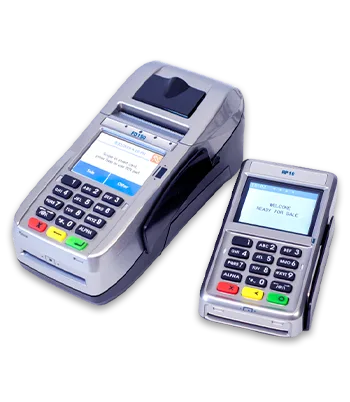
First Data FD150
Countertop terminal
A countertop terminal with PIN debit and a built-in printer. Pair it with the RP10 so customers tap or dip on their side of the counter.
Ask about this setupRepair shops, tire and lube centers, body shops and detailers run big tickets, approvals over the phone and fleet accounts. We set up payments that keep the service desk moving and the card fees on those big tickets in check.
A real person picks up. No call trees, no AI, no 10-minute holds.
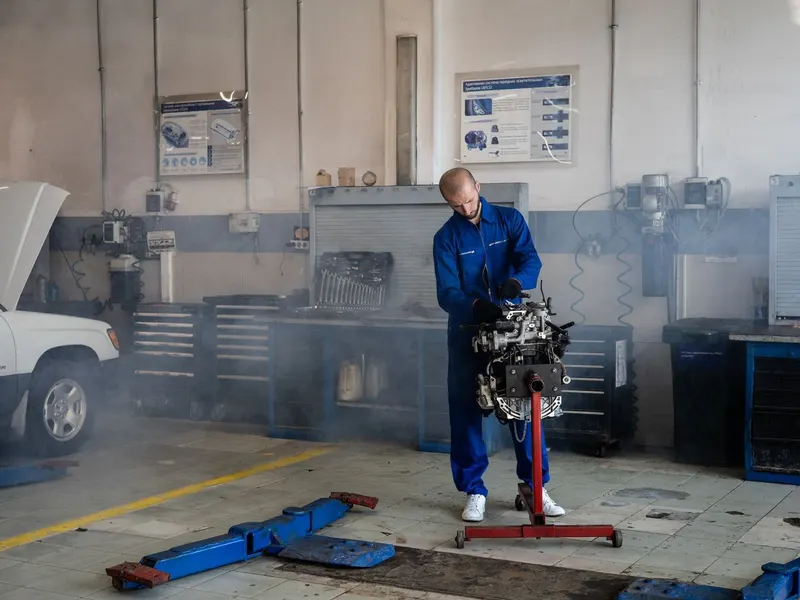
Approvals
Then someone reads a card number over the phone, it gets written down, and the payment is keyed in at the highest rate.
Big tickets
Large rewards and business cards carry higher interchange, and keyed-in payments cost even more.
Pickup
Customers wait at the counter while the invoice is printed, totaled and paid on a slow terminal.
| Need | How we handle it |
|---|---|
| Fast checkout at pickup | A countertop terminal with tap, chip, PIN debit and a built-in printer |
| Phone approvals and remote payments | Text-to-pay links, so the customer pays from their phone and no card number is written down |
| Deposits on big jobs | Take a deposit when the parts are ordered and the balance at pickup, on the same account |
| Fleet and business accounts | Cards stored securely as tokens, with Level II and Level III data that can lower interchange on business cards |
| Your shop software | Payments that connect to the shop management software many repair shops already use. We check yours first |
| Card fees | Interchange-plus pricing with a small markup, plus a compliant surcharging, dual pricing or cash discount program where your state allows it |
Service desk
Countertop terminal
A countertop terminal with PIN debit and a built-in printer. Pair it with the RP10 so customers tap or dip on their side of the counter.
Ask about this setup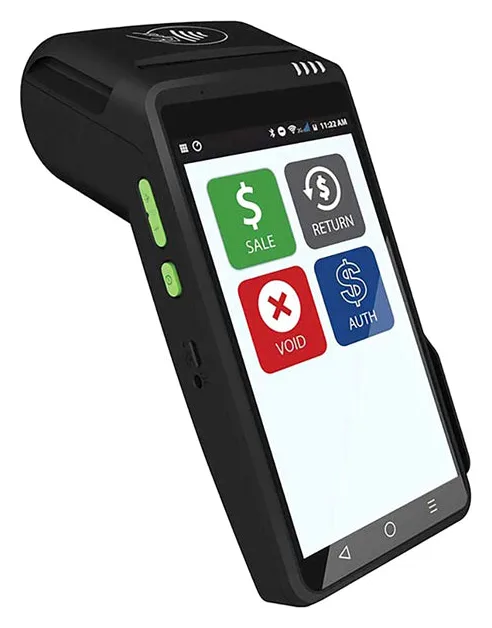
In the lot or bay
Wireless Android terminal
A wireless terminal with 4G and a built-in printer, for taking payment at the car or for mobile service.
Ask about this setupPhone approvals
Get paid faster
Text the customer a payment link when they approve the work. They pay in one click and the car is ready to go.
Ask about this setupSee every terminal and online payment tool we set up.
On large repair bills, three things move your cost most: taking the card in person instead of keying it, sending Level II or III data on fleet and business cards, and passing the fee on with a surcharge, dual pricing or a cash discount where your state allows.
Worked example
A repair shop with $70,000 a month in card sales, paying the industry average of about 2.55% all-in.
Keep absorbing the fees
$1,785/month
$21,420 a year
$70,000 × 2.55% = $1,785 a month, out of your margin.
Surcharge credit cards
$625/month
$7,497 a year
Credit customers cover their own fee. Debit can't be surcharged, so the fee on the 35% paid by debit ($24,500) stays with you.
Dual pricing or cash discount
$0/month
$0 a year
The card price covers the fee on every card, including debit. Cash customers pay the lower price.
Rather keep one price? On interchange-plus pricing, every 0.25% we take off your rate saves about $175 a month ($2,100 a year) at this volume.
Example, not a quote. Industry average effective rate: 2.2%–2.9% for auto repair and service shops; we use the middle of that range. Assumes about 35% of card sales on debit. Source: checkmyfees.com industry benchmarks. Your audit uses your real statement, and the rules for passing fees on depend on your state.
Card fees
Surcharge, dual pricing or cash discount? Check your state in 10 seconds.
A credit surcharge is capped at 3% and never applies to debit. Dual pricing shows a cash price and a card price, and a cash discount takes money off for cash. Rules depend on your state.
Check the rules for your stateSend one statement
Upload a recent processing statement, or tell us how your shop takes payments today if you're just starting.
Get your audit and a setup
We explain every line you pay now, then match the hardware, software and pricing to how you actually sell. No pressure to switch.
Go live with backup
We configure your equipment before it ships, so you plug it in and sell. When you call, a person picks up fast.
A countertop terminal with a PIN pad for pickups, plus text-to-pay for customers who approve the work by phone. Both deposit to the same account.
In most states, yes, up to 3% on credit cards only, with signs and a receipt line. Some states restrict it. Dual pricing and cash discounts are other options. Check your state.
Usually. Tell us what you use and we will check which payment setups connect to it before you change anything.
Fleet and business cards can cost more to process, but sending Level II or III data with the payment can qualify them for lower interchange rates.
For repair shops
Send one statement. We explain every line and show you how to get paid faster on every repair.
Get my shop audit