
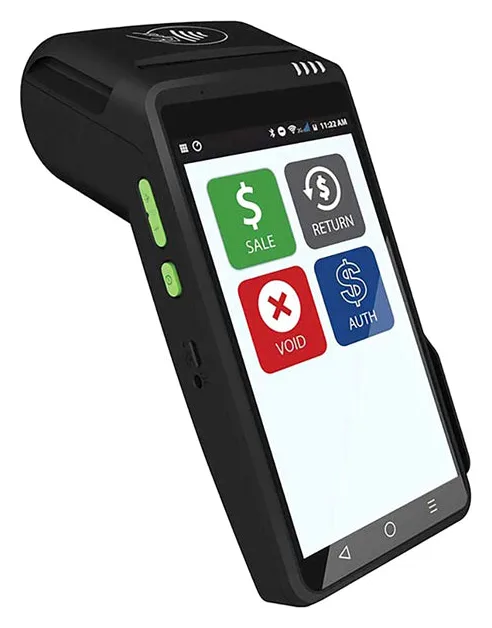
Wireless with 4G
Dejavoo QD2
Wireless Android terminal
A wireless Android terminal with a 5.5-inch touchscreen, built-in printer and 4G cellular, so it works where the Wi-Fi does not.
Ask about this setupPlumbers, HVAC, electricians, landscapers, cleaners and contractors lose time chasing checks and invoices. We set up wireless terminals, text-to-pay and invoicing so your crew collects before they pull out of the driveway.
A real person picks up. No call trees, no AI, no 10-minute holds.
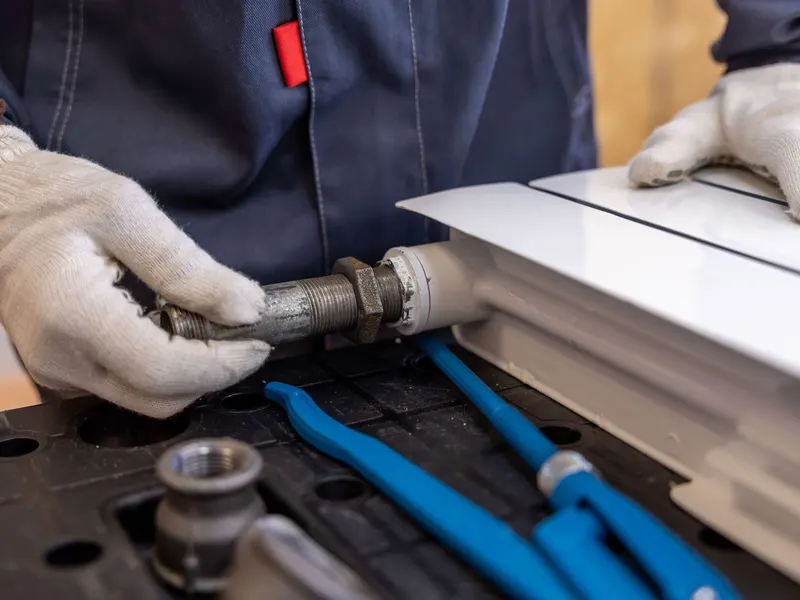
Cash flow
Paper invoices and mailed checks stretch your payroll. Every day a bill sits open is a day you float the cost of the job.
The truck
Or they key cards into a phone app at the highest rate, with no receipt and no record back at the office.
Big tickets
A $6,000 install on a business card costs more when the processor does not pass the extra data that qualifies for lower commercial rates.
| Need | How we handle it |
|---|---|
| Take cards on site | Wireless terminals on cellular or Wi-Fi with a built-in printer, so the customer taps, dips or signs on the spot |
| Deposits and progress billing | Invoices and text-to-pay links for deposits before the job and the balance after |
| Phone payments | A virtual terminal in the browser for card payments taken over the phone (online payments) |
| Recurring service plans | Card-on-file and scheduled billing for maintenance plans and monthly service |
| Business customers | Level II and Level III data on commercial cards, which can qualify for lower interchange on large B2B tickets |
| Card fees | Interchange-plus pricing with a small markup, plus a compliant surcharging, dual pricing or cash discount program where your state allows it |
From a full terminal with a printer to a reader that fits in your pocket, matched to how your crew works.
Wireless with 4G
Wireless Android terminal
A wireless Android terminal with a 5.5-inch touchscreen, built-in printer and 4G cellular, so it works where the Wi-Fi does not.
Ask about this setup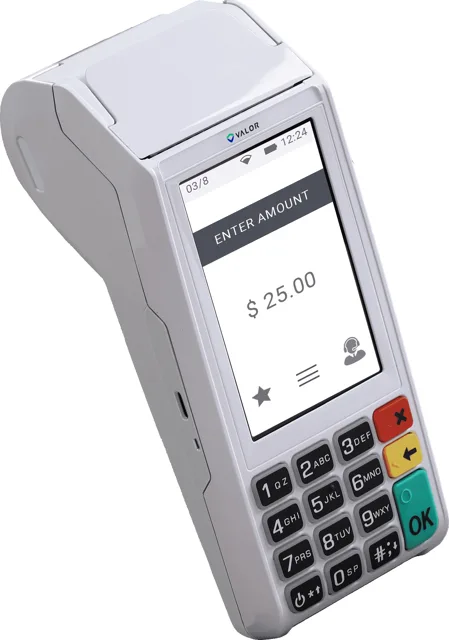
Slim and all-day
Wireless terminal
A slim wireless terminal on Wi-Fi or cellular with a battery for all-day use. Good for crews running several stops a day.
Ask about this setup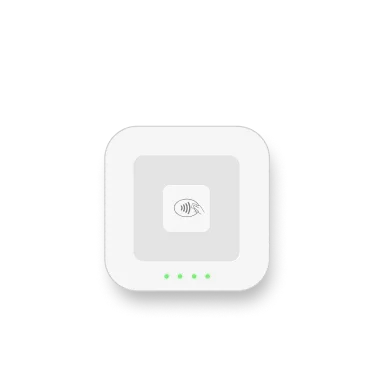
Pocket-sized
Mobile card reader
A small reader for tap and chip that pairs with your phone or tablet. Good for solo techs and small crews who want to keep it simple.
Ask about this setupFrom the office
Get paid faster
Send an invoice or a payment request by text or email, and the customer pays in one click. Deposits land with the rest of your sales.
Ask about this setupSee every wireless terminal and online tool we set up.
On a big job, the processing method matters as much as the rate. A card tapped on site costs less than one keyed in later, and commercial cards with Level II or III data can qualify for lower interchange.
Worked example
A home service company with $60,000 a month in card sales, paying the industry average of about 2.55% all-in.
Keep absorbing the fees
$1,530/month
$18,360 a year
$60,000 × 2.55% = $1,530 a month, out of your margin.
Surcharge credit cards
$536/month
$6,426 a year
Credit customers cover their own fee. Debit can't be surcharged, so the fee on the 35% paid by debit ($21,000) stays with you.
Dual pricing or cash discount
$0/month
$0 a year
The card price covers the fee on every card, including debit. Cash customers pay the lower price.
Rather keep one price? On interchange-plus pricing, every 0.25% we take off your rate saves about $150 a month ($1,800 a year) at this volume.
Example, not a quote. Industry average effective rate: 2.2%–2.9% for HVAC, plumbing and electrical contractors; we use the middle of that range. Assumes about 35% of card sales on debit. Source: checkmyfees.com industry benchmarks. Your audit uses your real statement, and the rules for passing fees on depend on your state.
Card fees
Surcharge, dual pricing or cash discount? Check your state in 10 seconds.
Many service companies pass the card fee on with a compliant surcharge, a card price and a cash price on the invoice (dual pricing), or a cash discount. The rules depend on your state.
Check the rules for your stateSend one statement
Upload a recent processing statement, or tell us how your business takes payments today if you're just starting.
Get your audit and a setup
We explain every line you pay now, then match the hardware, software and pricing to how you actually sell. No pressure to switch.
Go live with backup
We configure your equipment before it ships, so you plug it in and sell. When you call, a person picks up fast.
A wireless terminal for jobs where the customer is home, plus invoicing and text-to-pay for everyone else. Both deposit to the same account.
In most states, yes, up to 3% on credit only, and it must be disclosed before payment. Some states restrict it. Check your state.
Extra line-item detail sent with a business or government card payment. When it is sent correctly, the transaction can qualify for lower interchange rates. It matters most on large B2B tickets.
Tell us what you use for scheduling and invoicing. We will check whether it connects to the gateway before you commit.
For field services
Send one statement, or tell us how you bill today. We will show you how to get paid on site and what it should cost.
Get my field service audit